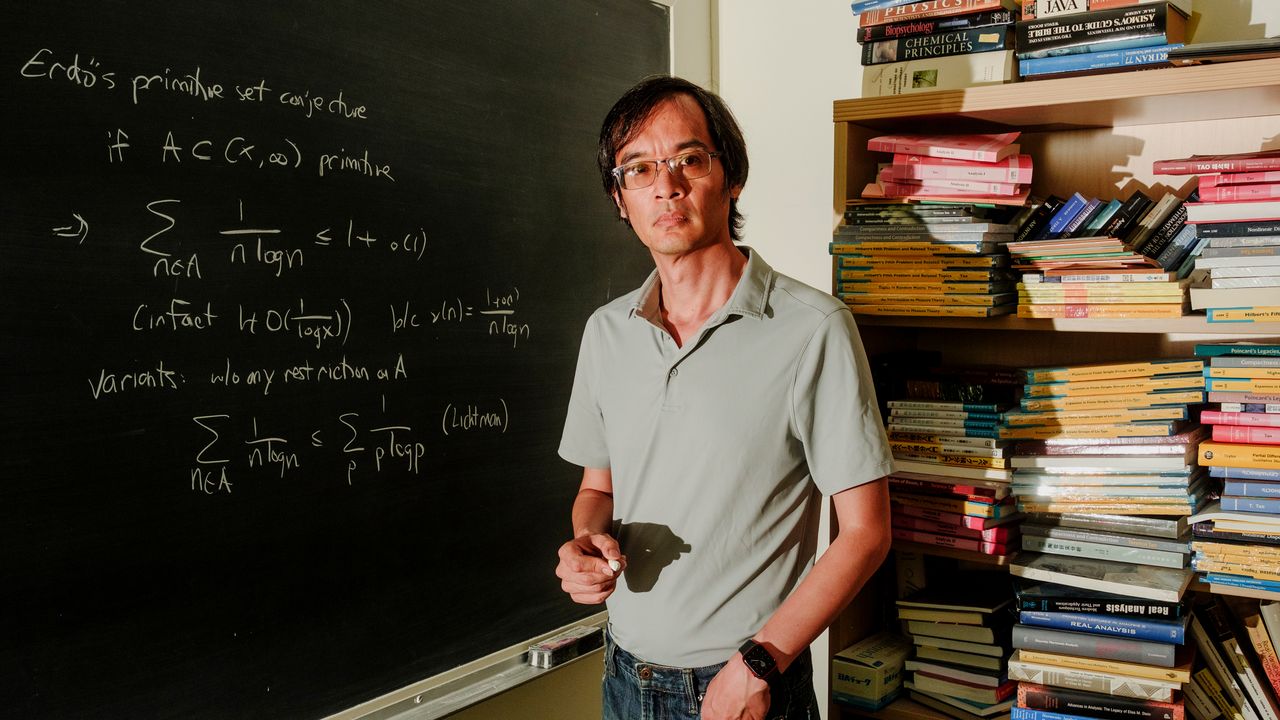
Terence Tao, the UCLA mathematician and Fields Medalist widely seen as the field's guide through the AI era, now warns that artificial intelligence could destroy mathematics' deliberative process, according to a New Yorker profile by Rivka Galchen. Tao was once among the most enthusiastic prominent voices on AI's role in research math; his shift marks one of the strongest cautionary notes yet from inside the discipline.
The warning lands as AI systems solve problems that stumped mathematicians for decades. In January, GPT-5.2 Pro appeared to have solved Erdős Problem #728 largely on its own, and AI tools reached gold-medal level at the 2025 International Mathematical Olympiad — advances that have turned math into a benchmark race for Google DeepMind, OpenAI and Anthropic.
From Erdős prodigy to AI's leading interpreter
Tao was ten years old in 1985 when the Hungarian mathematician Paul Erdős visited his home town of Adelaide and posed a problem for them to work on together. Tao went on to win a Fields Medal at thirty-one and, in 2025, co-founded the Foundation for Science and AI Research.
Unlike peers who dismissed early AI as "a toy," Tao engaged with it publicly and seriously, which is why his skepticism now carries weight. He has noted that AI solves problems in ways "orthogonal" to human thinking: proofs that spend pages on what an undergraduate would find obvious, then compress a huge conceptual leap into a few lines.
Why mathematicians are watching Tao's warning
The New Yorker profile describes a field transformed in under a year, with mathematicians and hobbyists using AI tools to chip away at the milder unsolved Erdős problems — the "marshmallows," in Erdős's terms, as opposed to the deep "acorns."
Tao's concern is not that AI gets math wrong, but that it could change how mathematics is done: the communal checking, argument and deliberation that turn claims into accepted knowledge. His February talk was titled "Machine Assistance and the Future of Research Mathematics."