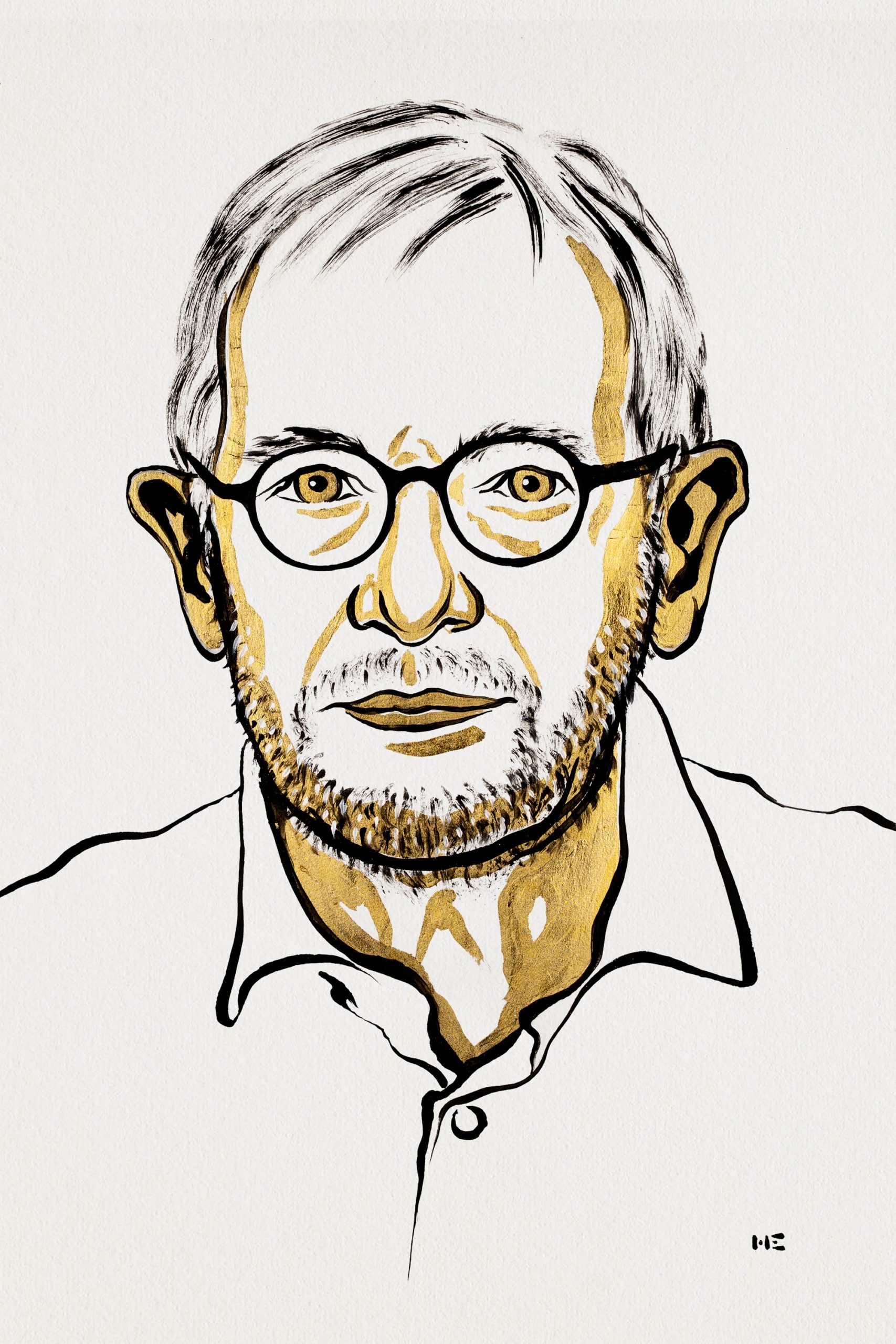
For the second time on the 2026 Nobel calendar, the Royal Swedish Academy of Sciences put a Nobel Prize in Physics on the line. That prize went to Francis Halzen, a physicist at the University of Wisconsin-Madison, for his decisive contributions to the IceCube Neutrino Observatory and the discovery of high-energy neutrinos of astrophysical origin.
That means a single winner this year, with a prize share of 1/1, and a life's work spent chasing the most elusive particles in the universe from a detector buried deep in Antarctic ice. The award rewards science that has given astronomers a completely new set of eyes.
What IceCube did for astrophysics
IceCube, the observatory Halzen led and built, is a detector embedded in the ice beneath the South Pole. It captures high-energy neutrinos born far across the universe, particles that travel near the speed of light and pass through almost everything without leaving a trace. This is why the work is often called neutrino astronomy: information that reaches us straight from cosmic sources.
As Ars Technica explains, neutrinos are the most abundant subatomic particles in the universe but they almost never interact with matter. Millions of them pass through every person every second. That is why Isaac Asimov called them ghost particles, and it is also why they are so hard to catch.
The prize announcement specifically cites the discovery of high-energy neutrinos of astrophysical origin. That discovery opened a field in which neutrinos join light, and gravitational waves, as part of what scientists call multimessenger astronomy.
Francis Halzen on the award
The new laureate told reporters he did not see it coming. Speaking by phone from Italy during a news conference in Stockholm, Halzen said: “It was a great surprise, and I obviously didn't expect it.”
He also made clear that the prize belongs to a much larger group. Halzen described his work as the result of a large collaboration, adding that the award reflects on the really courageous people who joined the project when no respectable conservative physicist would have. Many talented people did, he said, and that is why he is here.