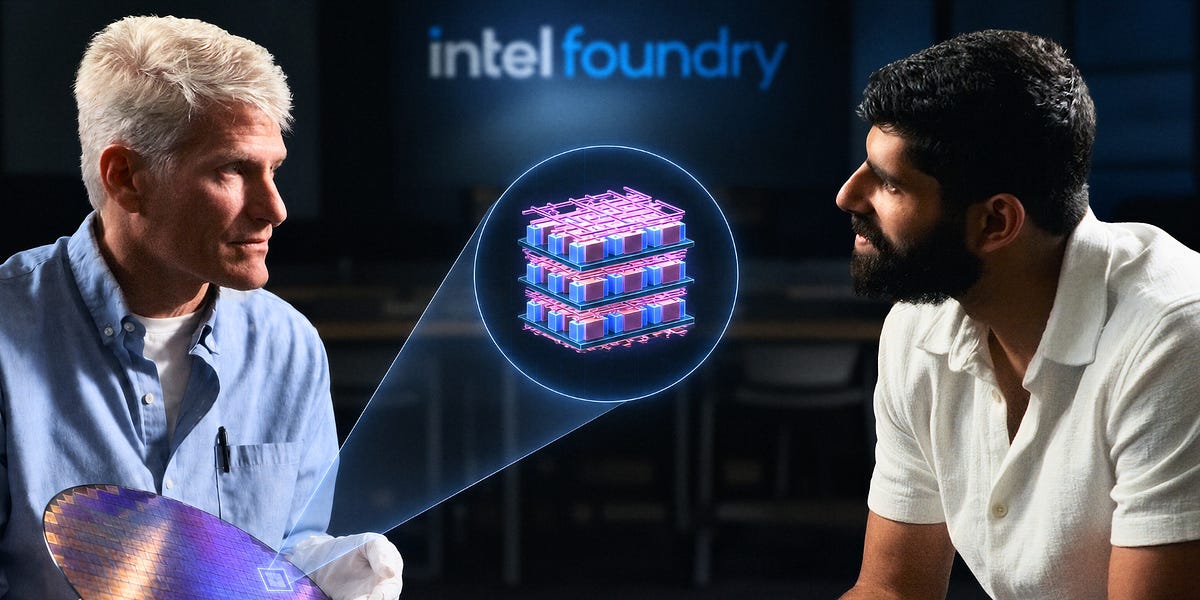
Intel's technical leadership sat down for a rare, in-depth interview about the future of computer chips, AI demand and the company's place in the semiconductor race. The conversation, published by the Dwarkesh Podcast after two days touring Intel's most advanced fabrication plant, features Intel CTO Pushkar Ranade and other executives.
The timing matters. AI compute has grown roughly three times a year for the past decade, yet Intel's CTO says the company could only double leading-edge wafer production using today's global stock of chipmaking tools. That gap between demand and supply sits at the center of the discussion.
Intel's CTO on AI chip demand
According to Intel's CTO, the industry faces a structural problem rather than a temporary one. Demand for AI compute keeps climbing far faster than fabs can add capacity, because building new leading-edge wafer lines depends on a limited global supply of chipmaking equipment.
The interview explores the tricks foundries might use to stretch that crossover point, where demand surges well ahead of supply. The discussion covers technologies that are hard to grasp without seeing them up close, including gate-all-around transistors, backside power, CFET and hybrid bonding.
Lessons from 10nm and the TSMC question
Intel's leadership also addressed what the company learned from its troubled 10nm generation, a period that cost the chipmaker its process lead. The interview puts those setbacks in context as Intel tries to execute more reliably on its newer nodes.
A central question is whether Intel can catch up to TSMC, the Taiwanese foundry that now dominates advanced chip manufacturing. The conversation does not shy away from the competitive reality, and it touches on Terafab, the ambitious manufacturing concept Intel has floated for scaling production.