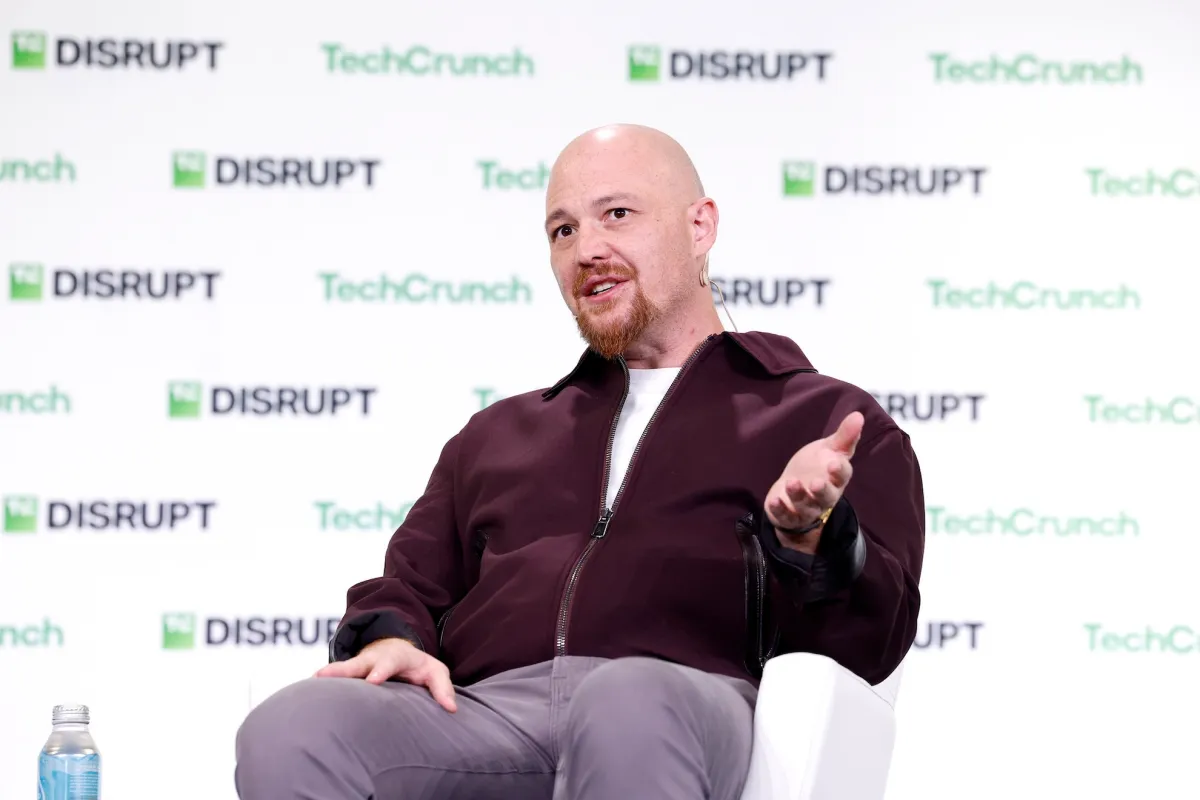
Replit has made OpenAI its default model provider, replacing Anthropic, CEO and co-founder Amjad Masad said onstage at TechCrunch Disrupt. The AI coding platform had relied on Anthropic's Claude models to run its service before announcing a partnership with OpenAI in August.
Masad said the switch came down to cost, partnership and performance. Anthropic's Claude is still available on the platform, but OpenAI's ChatGPT is now the model most users will get by default — a change that could cut Replit's spending with Anthropic, since most customers tend to stick with the default rather than choosing a model themselves.
Why Replit chose OpenAI over Anthropic
Masad said Replit runs its own internal benchmark and also publishes a public one. On those tests, he said, OpenAI's Sol and Astra models consistently perform better at building vibe-coded applications from scratch. "I think ChatGPT is better now," he said, adding that the decision rested on cost, partnership and performance together.
The CEO also said Replit had been, until recently, a top-five customer of Anthropic, and that the earlier Claude partnership helped the company grow its revenue significantly. Replit now describes itself as model agnostic: users can still choose Anthropic's Claude or other supported models, with OpenAI as the preferred partner powering Replit Agent.
Anthropic partnership dispute and Replit's growth
Not everyone agrees with Masad's framing. Insiders familiar with the Anthropic-Replit relationship rejected his onstage comments, and one person said the partnership was still in place. Replit's own website, blog posts and social media promoted Anthropic products as recently as a few weeks ago, including a late-September blog post citing Claude Fable 5 and Claude Fable 5.1 in Replit Agent's production environment.
Masad also shared growth figures at Disrupt. Enterprise was about 2% of revenue last year and roughly 15% this year, he said, with more than 50% of revenue now coming from B2B. Backstage, he told TechCrunch he expects enterprise and government customers to make up more than half of revenue in 2027.