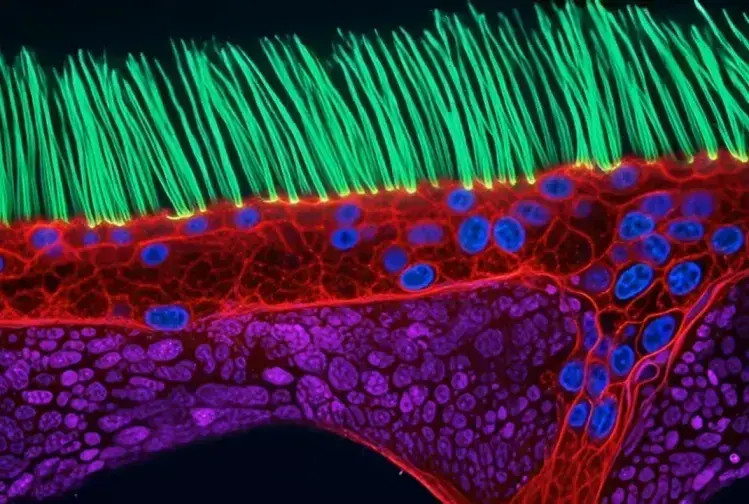
Nikon has disqualified the winner of its 16th annual Small World in Motion contest after an investigation concluded the entry violated competition rules, following widespread suspicions that the video was AI-generated. The top prize now goes to Nguyen Nam Nhat of Vietnam for a video of a tiny roundworm and a single-celled organism.
The original winning entry came from Dr. Ning Xu of Tsinghua University in China. His video claimed to show tiny cilia beating in the airways of a child with primary ciliary dyskinesia, a rare respiratory disorder. But scientists quickly flagged the footage as suspicious, and their doubts ultimately led Nikon to strip Xu of his title.
Why scientists suspected the video was AI-generated
Researchers pointed to a series of anomalies in the video that did not match real cellular biology. Some said the structure and size of the cells were abnormal, while others noted that certain features appeared and disappeared in ways never seen in living tissue.
A more concrete clue came from Ian Donovan, a PhD student at UT Southwestern Medical Center, who found what he described as a distinctive AI watermark in the source image. Two former competition judges also raised concerns about the clip's authenticity, adding pressure on Nikon to investigate.
- Structures that 'pop in and out of existence,' according to a University of Florida associate professor
- Cilia that 'appear from nowhere,' a classic sign of AI generation
- A distinctive AI watermark found in the source image by a UT Southwestern PhD student