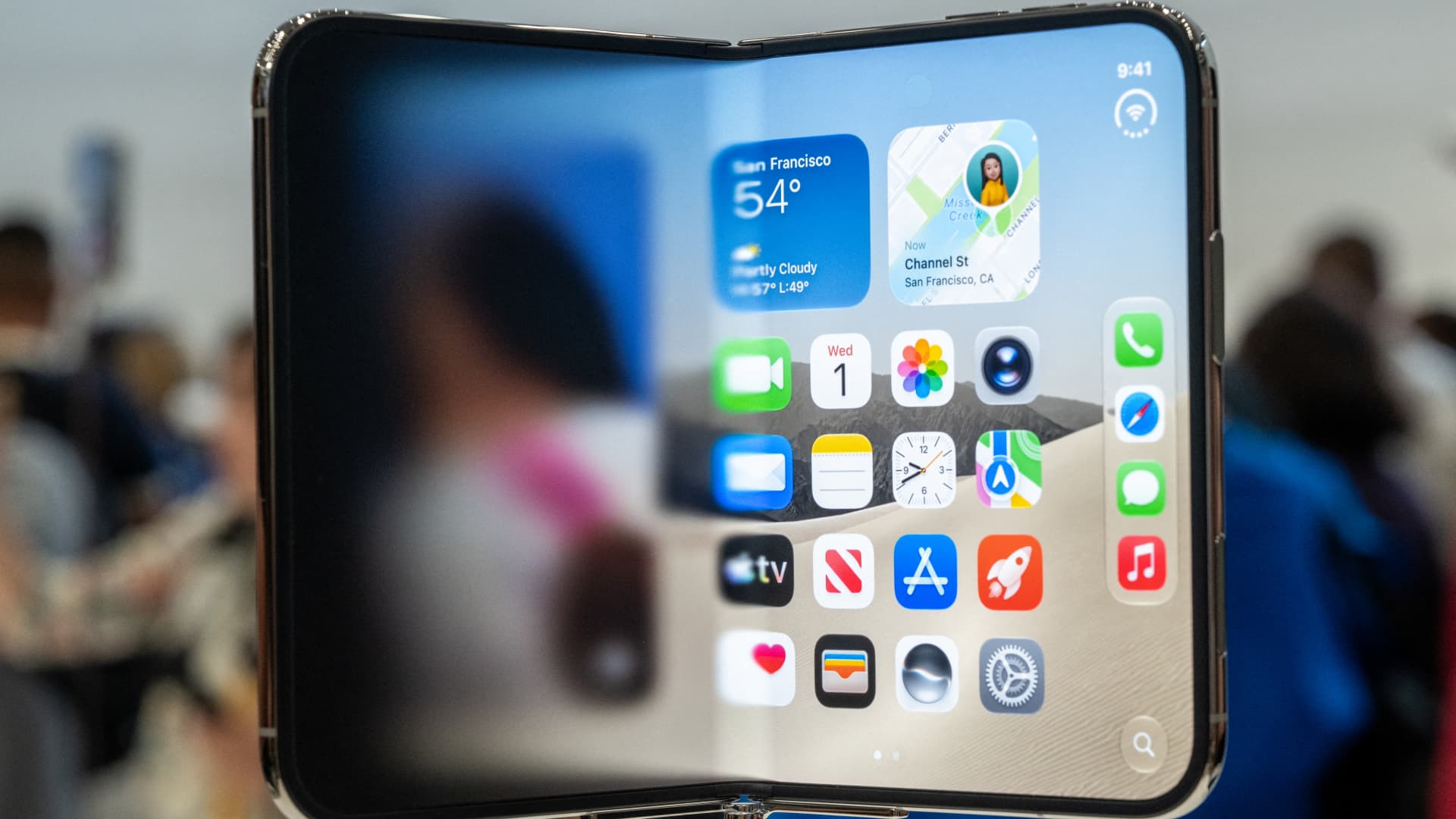
Apple will commit up to $100 million over the next three years to Perryman Company, a titanium producer based in Houston, Pennsylvania, to make titanium for Apple products including the $1,999 iPhone Duo. The company also said it is expanding its partnership with Delaware-based Qnity Electronics, which will manufacture advanced films for the variable-aperture camera system on the iPhone 18 Pro.
Both moves sit under Apple's American Manufacturing Program (AMP), announced in August last year, when the company raised its domestic spending plan by $100 billion to a total of $600 billion. Apple says nearly 100 components used in the iPhone Duo and iPhone 18 Pro are produced by American companies across more than a dozen states. The news lands just as the Duo, Apple's first foldable iPhone, reaches stores on Friday.
Perryman titanium and the iPhone Duo enclosure
Perryman will melt, forge and roll grade 5 titanium, which Apple says will contain at least 80 percent recycled material. That titanium is used for the Duo's enclosure, where Apple credits it for durability.
Apple did not say whether the Perryman agreement will increase near-term capacity for the foldable, a question mark given how tight supply already is. Sabih Khan, Apple's chief operating officer, said the company is "thrilled to expand our work with companies producing advanced materials and components for our newest iPhone lineup right here in America."
iPhone 18 Pro camera: what Qnity adds
Qnity Electronics, which joined the American Manufacturing Program in March, will produce advanced films essential to the new variable-aperture camera system on the iPhone 18 Pro. That feature lets the main camera adjust how much light enters the lens depending on conditions, giving users more control over light and depth.
Apple described the system as the most advanced camera it has ever made, without detailing further specifications. The company also highlighted other AMP partners: Broadcom for US-made chips, Corning for specialty glass used in iPhones and Apple Watches, and Amkor, which is building a semiconductor packaging and testing facility in Peoria, Arizona. Apple adds that all its direct suppliers must power their entire Apple manufacturing operations with renewable energy by the end of the decade.