Anthropic's subscription plans deliver roughly five times more API-equivalent value per month than OpenAI's when used for agentic workloads, according to a SemiAnalysis analysis published on October 5, 2026 and flagged by Techmeme. The comparison pits Anthropic's Claude Opus 5.5 against OpenAI's GPT-6.1 Sol.
The finding matters because subscriptions, not pay-as-you-go API billing, remain the main way consumers and small businesses pay for AI. If one plan quietly hands users far more usable compute per dollar, that gap shapes which assistant people actually build their daily workflows around.
What SemiAnalysis tested
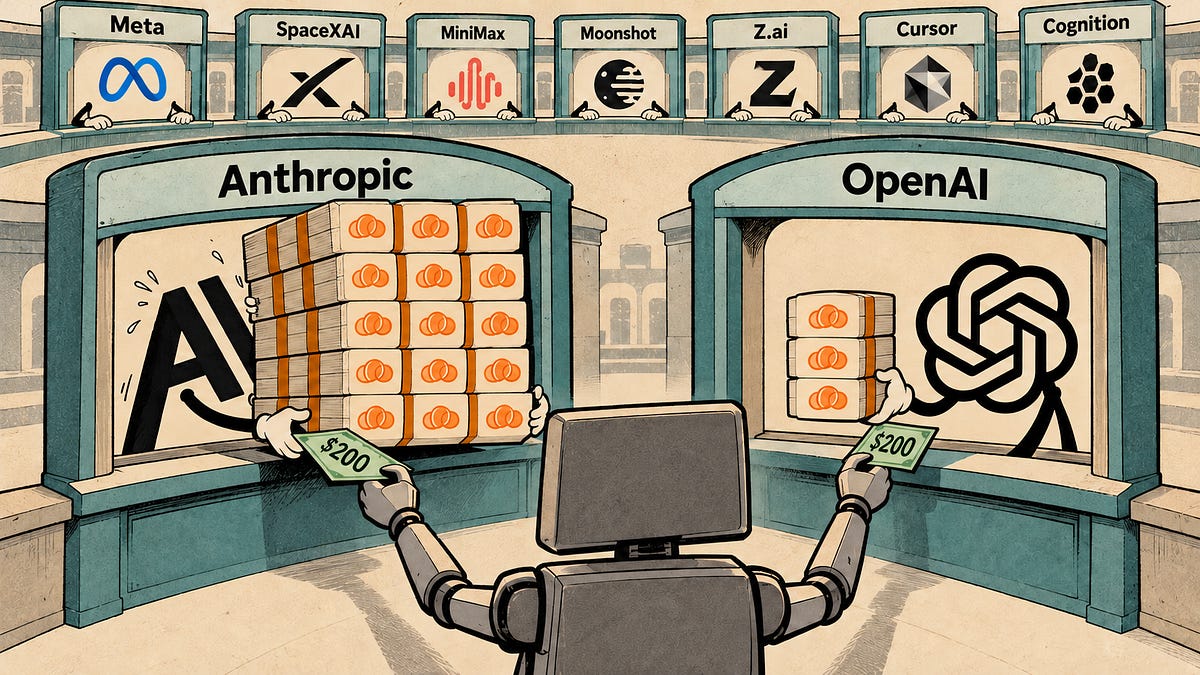
SemiAnalysis said it limit-tested every AI subscription plan from Anthropic, OpenAI, Meta, SpaceXAI, MiniMax, Moonshot, Z.ai, Cursor and Cognition. The team behind the report includes Andrew Megalaa, Max Kan and Dylan Patel.
The metric is API-equivalent value: how much usage a subscriber gets compared with what the same workload would cost through paid API pricing. For agentic tasks, where models run multi-step jobs with tools rather than answering single prompts, the analysts put Anthropic's plans about 5x ahead of OpenAI's.
Why Anthropic wins on agentic workloads
The report notes that AI subscription plans are heavily subsidized and can still make economic sense as customer acquisition and marketing tools. That subsidy is precisely what makes the value gap possible: providers are effectively buying loyalty by absorbing compute costs.
SemiAnalysis also points to OpenAI's generous usage resets, which it says helped drive the recent surge in Codex adoption. Those resets pushed Anthropic to repeatedly walk back planned subscription nerfs to avoid losing users in the court of public opinion. In other words, competition between the two labs is now being fought with plan limits, not just model quality.